
Jeff Scult at AUREA: Align on Life Sets Before Skill Sets
Jeff Scult, founder of One Golden Thread, sits down at AUREA II to explain why he vets a partner's values before their skills, how to run a clearing conversation, and what his father taught him about giving and receiving.
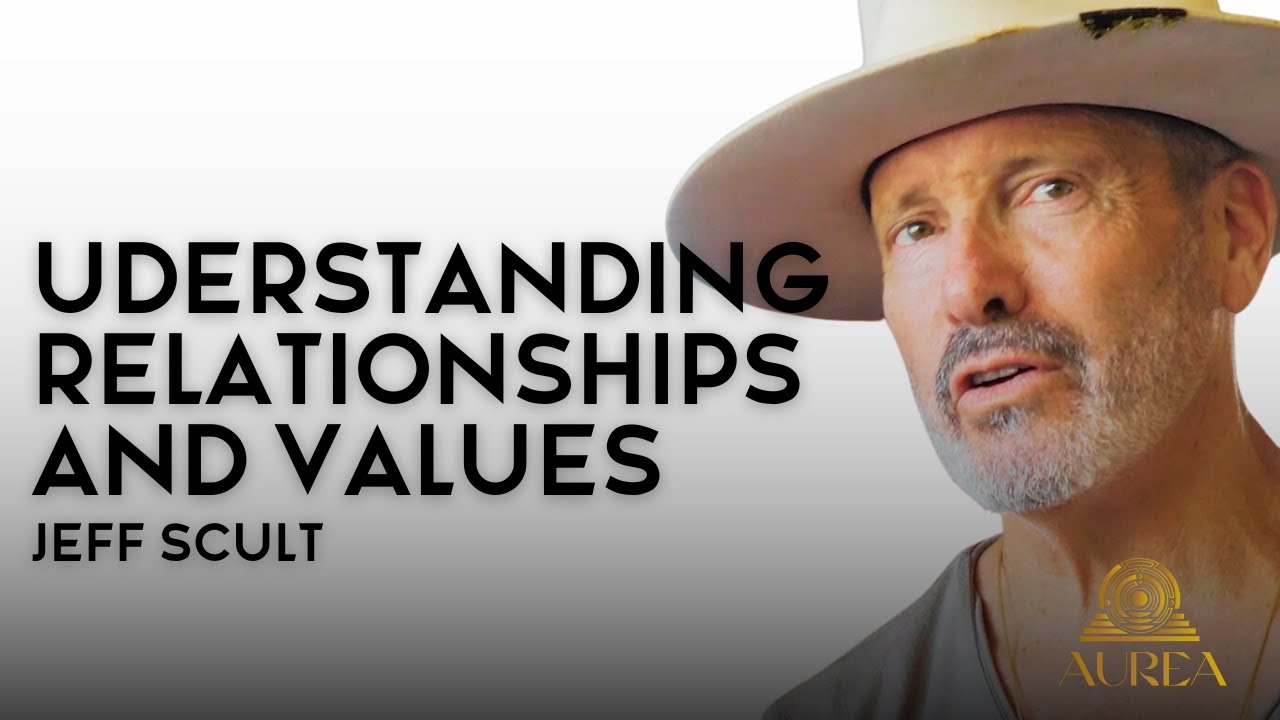
Twice in his life, Jeff Scult rushed into a partnership because the other person's skills dazzled him. Both times it ended badly, and he does not soften how badly. "It took a pound of flesh from my soul both times," he told his interviewer at AUREA II.
Scult is the founder of One Golden Thread. This was a sit-down conversation rather than a talk from the stage, and it began where the two of them had left off the day before: with the relationship we have with money, and how quickly that becomes the relationship we have with everything. Business partners. Marriages. Friendships we have quietly outgrown.
What Jeff Scult means by life sets before skill sets
Scult's rule for choosing any partner is to define and align on life sets before you get intoxicated by skill sets. Life sets are values: how someone relates to money, how they treat people, whether their word holds, why they are doing the work at all.
He is specific about how the trap springs. "I would fall prey to becoming intoxicated by some of these complementary skill sets," he said. Someone is excellent at exactly the thing you are not, you lean in hard, and you never once ask what they actually believe. His framing is that a business partnership is "a marriage in and of itself," and that most people give far more scrutiny to a romantic partner than to the person who will hold half of their company.
The interviewer opened the conversation by naming how invisible this becomes. We normalize a relationship with money as scarce. We normalize a pattern in romance that never works out and build a story around it. Normal is not the same as aligned.
How to read someone's values before you commit to them
Scult's answer starts inside you. Know your own core values first, the ones he calls unimpeachable, the ones that end the conversation if the other person does not hold them. Without that list, you have nothing to measure anyone against.
He gave the room two he uses. Transparency, which he defines sharply: no lies by omission, none of the "well, you didn't ask that question, so why would I need to tell you that." And integrity of word, which he defines as whether someone actually does what they said they were going to do.
Then he gave the field tests. Take them to dinner and watch how they treat the wait staff. Ask what their relationship with money is when they have it, and ask what it is when they do not. "Put yourself in situations where you can understand the values that somebody has," he said. These are cheap to run and they happen before anything is signed.
Why a values mismatch stays hidden until the money arrives
Scult's warning is that struggle hides a values mismatch and success exposes it. In the early fight, when there is no money and no ego and you are both lifting something out of the ashes, complementary skills alone can carry a partnership a long way.
Then it works. "When you start to roll forward and there's abundance being created, that's sometimes where the life sets will show themselves," he said, "sometimes in a very ugly way." The partner you never asked about money is now a partner with money in front of him. His counsel is to do that work before you get there, because the years when everything is hard will not tell you what you need to know.
What a clearing conversation is, and the four tests before you have one
A clearing conversation is what Scult recommends when you are already inside a partnership or a marriage and you realize the values do not line up. You open by sharing where you are now, you ask where the other person is, and you do it without blame.
The interviewer put the hard version of the question to him: what if you have already built the business, already built the marriage, and only now see the mismatch? Scult said his younger self would have arrived with blame and shame, carrying pain and calling it victimhood. What he does instead is offer something vulnerable first, and speak from evolution rather than accusation. "I am not that, I am this, this is me now."
He runs every hard conversation through four checks before he opens his mouth. It is important. It is my truth. It is timely to share it. And he will share it with loving kindness. After that, he detaches from the response and surrenders to the outcome. "Then I'm just sharing, and I'm inviting you to share as well." He calls the meeting point a benevolent bridge: not a repair of the old bridge with all its scraped knees and attached meanings, but a new one, built together.
How to end a relationship without a slow-speed car crash
Sometimes the answer is to leave, and Scult said so without hedging. "Not everybody's intended to go on the ride." If you have evolved and the other person is no longer aligned to you, ending it is an act of integrity rather than a failure.
He described the tattoo he would get if he had tattoos: protect the realm, revere the realm, wield the shield. Protect the realm is knowing your values. Revere the realm is honoring them. Wield the shield is taking decisive, precise action in integrity with them.
The idea that makes the ending survivable is one he says arrived early, as a drop of gold: release your expectation around duration. We are conditioned to believe every good thing must last a lifetime, when some are built for a season and some for a single moment. Business partners can become mentors, or friends, or acquaintances. "I thank you, and I wish to complete our time together." He has been through the version that ends in a slow-speed car crash, and he does not recommend it. His summary is that conscious uncoupling is downstream of something people skip: "conscious coupling is understanding life sets before skill sets."
How to decide when you are too excited to see clearly
Excitement is the exact condition in which people make their worst partnership decisions, because the mind shows you what it wants to see. The interviewer named it plainly: this is the soulmate, this is the business partner, this is the answer, and the fog arrives dressed as certainty.
The practical tool they landed on was Human Design, and specifically knowing your own decision-making authority. Emotional authority means sleeping on it, sitting with a decision over time rather than answering in the room. Others decide from the gut in the moment. Either way, the instruction for a big decision is the same: give it a pause.
Scult was clear that this is not a search for perfection. Some decisions will not turn out to be the full path forward, and a friend's line has stayed with him: either way is better. What he wants you to avoid is the maybe. Maybes gather atrophy. Get to a yes or a no, set the container, and if it turns out to be misaligned, give yourself permission to pivot into a new chapter and carry the lesson with you.
What his father taught him about giving and receiving
Asked what he wanted to leave viewers with, Scult offered something his father said to him after his mother died, at the end of a seven-year journey with Alzheimer's, two days before the country locked down in March 2020. For her last two months she could not purse her lips to kiss him back, and she was, in Scult's telling, in a state of peace.
He asked his father what those years of giving had been like. His father said first that he had gotten something out of it too, the pleasure of watching her spark and light up. Then he said the thing Scult now passes on. When you are coming from pure intent, there is no giving and no receiving. It is just sharing love.
Scult's point is what it does to the ledger. People in service to the world block themselves from receiving because they are keeping score, and the score is the block. Remove the ledger and the question dissolves. "When we allow ourselves to receive, we can actually give boundlessly." He called that living life golden.
The through line of the whole conversation is that every relationship in your life is a choice you are still making, including the ones you think were settled years ago. Know your values, test for them early, speak them cleanly, and let go when the season is complete.
Watch the full talk above and learn more about Jeff Scult's work.
Frequently asked questions
What does Jeff Scult mean by life sets and skill sets?
Skill sets are what someone can do. Life sets are their values: their relationship with money, how they treat people, whether their word holds, and why they are doing the work. His counsel is to define and align on life sets before you get intoxicated by complementary skill sets, because a business partnership is a marriage, and skills alone will not survive the moment real money arrives.
How do you find out someone's values before going into business with them?
Start by naming your own unimpeachable values, so you have something to measure against. Then run cheap tests. Take them to dinner and watch how they treat the wait staff. Ask what their relationship with money is when they have it, and separately when they do not. Scult's two named values are transparency, meaning no lies by omission, and integrity of word, meaning they do what they said they would do.
What is a clearing conversation?
Scult's term for the conversation you have when you are already inside a partnership or marriage and the values no longer align. You offer something vulnerable about where you have evolved to, invite the other person to share theirs, and drop blame entirely. He runs it through four checks first: it is important, it is my truth, it is timely, and he will share it with loving kindness. Then he detaches from the response.
How do you end a partnership without it turning ugly?
Release your expectation around duration. Scult argues we are conditioned to believe every good relationship must last a lifetime, when some are built for a season. That makes completion possible without wreckage: thank the person, say you wish to complete your time together, and let the relationship change shape into mentorship, friendship, or acquaintance rather than end in what he calls a slow-speed car crash.
What did Jeff Scult's father say about giving and receiving?
After Scult's mother died at the end of a seven-year journey with Alzheimer's, he asked his father what those years of giving had been like. His father said he had received something too, the pleasure of watching her light up, and then said that when you come from pure intent there is no giving and no receiving, only sharing love. Scult uses it to dissolve the scorecard that stops people in service from receiving.
Back to Wisdom