
Joyce Haddad at AUREA: You're Not Broken. You're Attached.
The creator of Spiritual Divorce on why leaving someone physically doesn't end the relationship, why the same partner keeps arriving with a different face, and the three-word practice she gave the room to cut the cord.
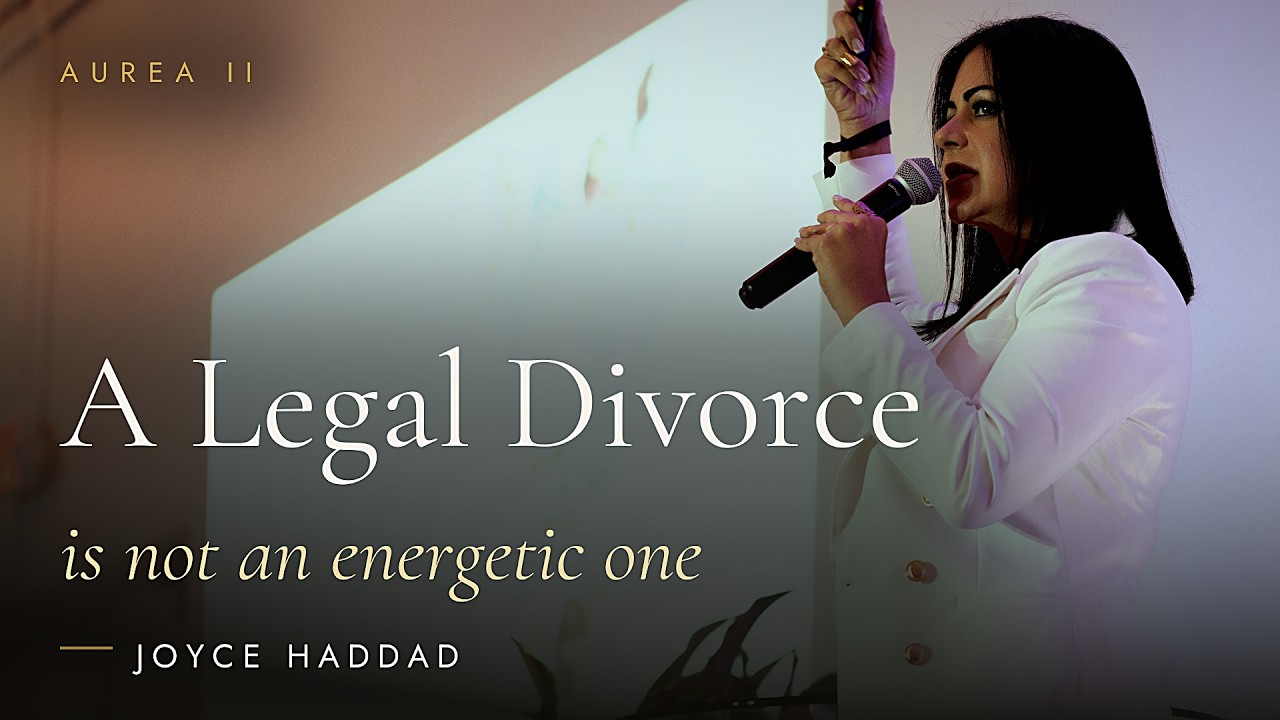
Joyce Haddad calls her work Spiritual Divorce, and she knows how the word lands. So she defines it before anyone can flinch.
"Divorce, for me, means separation for an integration. We need to separate in order to integrate."
Then she asked the room to raise a hand if they were entangled with a person, a place, a situation, a trauma, an addiction, a thought. Hands went up everywhere, and she gave them the number anyway:
"There's not one person on this planet who is not entangled."

What reframe actually does the work here
Most people arrive at this material believing something is wrong with them. Joyce takes that apart in one line, and it is the reason to read the rest.
"We think we're broken. We think we're stuck. But we're actually attached."
The distinction matters enormously. Broken means repair: long, uncertain, possibly impossible. Attached means detach. It relocates the problem from your character to a connection you are still holding.
Why leaving didn't end it
Her sharpest observation is the one nearly everyone has lived:
"Just because you're physically divorced does not mean you're energetically divorced."
She calls what remains soul webs. What other traditions call cords or filaments. In her account they carry codes and stories, and they keep transmitting long after the person has left the building. Ten years after you last saw someone, the looping thoughts are the traffic.
She extends it well past exes, which is where it starts to sting. You can be entangled with parents. Children. Business partners. Money. The dead. The country you left. And she is direct about that one, because she was speaking in Miami:
"A lot of people have left their city or their country and they're still attached. They can't produce money here the way they produced over there. You're still attached."
Her image for what's running underneath is very of-the-moment, and it lands:
"Instagram has an algorithm. Your energy field has an algorithm and a rhythm, and that's what's playing out in your life. If you're not changing the streaming in your field, you're not going to get what you want."
Which is her answer to the question that brings most people to her: why do I keep repeating the same pattern with a different face?
"Your most dominant entanglements are the ones showing up in your reality. You're not creating from the desire of your soul. You're on automatic pilot, and that sucks."
Where this method actually came from for her
She does not present this as theory she read somewhere.
She grew up in a Middle Eastern household with a strict entrepreneur father, and describes being physically and verbally abused: powerful in public, and hidden on the inside.
"I was in a prison in disguise. I didn't know how to break free."
She was twenty-four when he was diagnosed with a rare cancer. Her description of that moment is unsentimental about her own position in it: she was so dependent on him that when he got sick, she lost her identity and her power along with him.
That is the entanglement she had to build a method to get out of.

How the untangle, pull, release practice actually works
Rather than finish the theory, she cut her own talk short to run the practice, which is three words and your hands.
Untangle: name the knot. Pull: physically draw it out, from the head, the throat, wherever you feel it, as though clearing spider web from your hair. Release.
She had the room stand, breathe hard through the nose with hands raised to prime the body, then bring one person or situation to mind and speak the words they never said.
And she is careful about one thing that would otherwise frighten people off:
"You'll never forget love. You'll never forget the good memories. You're only untangling the anger, the stress: the relationship that's expired that you're still carrying in your backpack."
The closing is not a cutting-off. It's a two-way return: forgiving them, forgiving yourself, calling your own pieces back, and releasing theirs.
"I forgive you for everything we created in chaos. I forgive myself for everything I created in chaos."
What line she ended the exercise on
Mid-exercise, with the room shaking their hands out, she said the thing that separates this from a dependency dressed as healing:
"You will only go as far as you allow yourself to go. I'm not your guru. You are."
She teaches the modality to other practitioners, and she is unembarrassed about the money side of that. Her position is that healers being paid well is not a contradiction.
What question to ask when a pattern repeats
If the same situation keeps finding you in a new outfit, the useful question is not what's wrong with me. It's what am I still holding, and what is it still sending?
You do not have to accept her model of the mechanism to use the instruction. Name the thing. Say what you never said. Give back what was theirs and take back what was yours, and notice how much of what you called being broken was just a rope you had not put down.
Watch the full talk above.
Frequently asked questions
What does Joyce Haddad mean by "you're not broken, you're attached"?
She's relocating the problem from your character to a connection you're still holding. Broken implies repair: long, uncertain, maybe impossible. Attached implies you can simply detach. She calls these connections "soul webs" that keep transmitting even after the person or situation is physically gone.
Can you be attached to something other than an ex-partner?
Yes. She extends it to parents, children, business partners, money, the dead, even a country you left. Her point is that your most dominant entanglements are what actually show up in your reality; you end up recreating the same pattern with a different face because you're on autopilot, not creating from your soul's actual desire.
What is the "untangle, pull, release" practice?
A three-step exercise: name the knot (untangle), physically draw it out from wherever you feel it, like clearing a spider web (pull), then let it go (release). She's careful to note you're not erasing love or good memories, only the expired anger, stress, and stories you're still carrying.
Does this method make you dependent on Joyce Haddad as a healer?
No. She says it explicitly mid-exercise: "You will only go as far as you allow yourself to go. I'm not your guru. You are." She teaches the modality to other practitioners rather than positioning herself as the only source of it.
Back to Wisdom