
Michelle Mras at AUREA: You're Not Dead Yet. Get Up.
She spent two years and three months unable to walk or speak, able to move only her eyes, while her inner critics told her she had played small and should die. Then she heard six words. Michelle Mras at AUREA.
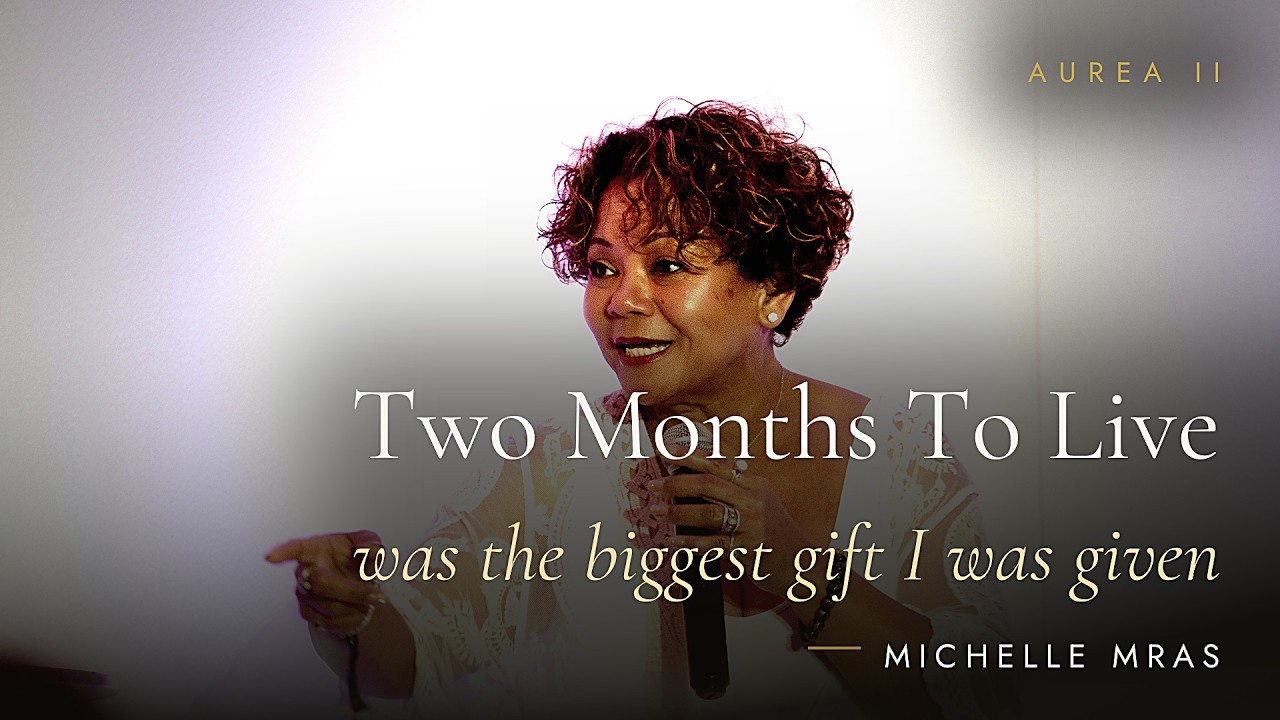
Michelle Mras opened with a question, and it is the same one she closed with. It was a line from the Diana Ross song she cried to as a child.
"Do you know where you're going to? Do you like the things that life is showing you?"
She cried to it because she did not know. A military brat, half Black and half Filipino, raised in her mother's Philippines with everything she knew about America coming from films, and nobody anywhere who looked like her.
"In my world, I thought because I was half Black and half Filipino, I was going to grow up to be a maid, a slave, or a garbage man. That is how my brain worked."
Why we stop dreaming so young
She asked the room how old they were when they stopped dreaming big. The answer that came back: seven, eight.
"It's when we started paying attention to other people. It's when we started listening to the boxes, when the teachers told us we had to colour within the lines."
Her own bubble popped at eight, stepping off a plane in New Orleans on her first visit to America. She had been in love with Gene Kelly, so she came down the steps singing good morning, good morning. Then her sister grabbed her face, pulled her back, and told her people don't sing like that. Shut up.
She was expecting a Disney film. She got a lesson in staying small, and she took it.
What happened after she asked the universe for a break
By 2014 she was living, in her words, a very small life. Good wife, good mother, military spouse, doing everything correctly while her husband was at war. Every time she tried to step out of the box, the world said no, and she stepped back.
Her work then was writing speeches for politicians, because if you want to change the world, change the people who make the rules. She quit when she understood what she was actually doing:
"I'm making people look good who shouldn't be looking good. I should show them who they really are."
Then came the day she still calls a joke with a very long setup. Sitting at her computer, working the way she always worked, she said out loud: Dear God, I am so tired. I just need a freaking break.
Her alarm went off. She left to collect her children. A car ran a stop sign and hit her.
"I asked the universe for a break. I got a couple of them."
What happened when she couldn't speak anymore
She thought she was fine. Twelve days later she was at a bank counter asking to deposit a cheque, and the teller was staring at her. Her daughter had to tell her what was happening.
"Michelle, you keep saying macaroni cheese spaghetti, over and over again. You are making no sense."
She had a traumatic brain injury. By her account she is missing four parts of her brain (frontal lobe, above the left ear, the back of the head), and her two hemispheres are disconnected. By her doctors' standards, she says, she should not be here.
The next day she stopped speaking. The day after that, she stopped walking. For two years and three months she could move only her eyes.
Carried downstairs each morning by her husband. Laid on a couch with her pills lined up and alarms on a phone to tell the house when she needed feeding or the bathroom; loud enough for her children to hear upstairs. She was forty-seven.
The critics get loud when you can't answer
This is the part she wanted the room to understand.
"How many of you have inner critics? Guess when they get really loud. When you can't talk back."
Hers came in and stayed: You played small. You don't deserve to live. Go ahead and die. Someone else is waiting.
Meanwhile her family and her doctors talked around her as though she had already gone. She heard every word of it and could only look at them.
She is unflinching about what she wanted then. She lay on that couch and screamed at God to kill her, and describes the cruelty of the position without any softening: she had finally found the perfect way to end her life, and could not move to do it.
What six words changed everything
And then, in the middle of that, she heard something.
"You're not dead yet. Get up."
She found herself six feet from that couch, on her knees, hands in the air. Everything that had ever been done to her flashed past at once, and she had the distinct sense of being held while it did.
What she said next was a bargain:
"Give me back my brain. Take my body. And I will do whatever you want me to do. I will say yes to every opportunity."
Why she could sing before she could speak again
One detail from the recovery is worth the whole talk.
She could not say glass of water. What came out was "liquid cylinder." But "I'd like some water, please", sung, came out perfectly.
She took it as an instruction. Last month, at fifty-five, she was approached to make a music album.
Between then and now: a TED talk. Then a breast cancer diagnosis with two months to live. Then three operating tables she says she died on and came back from.
And a reaction to that death sentence that only makes sense from someone who had already been there:
"It was the biggest gift I could have ever been given: a time limit."
She has since written a shelf of books and finished a doctorate. With a brain injury.
Why she stopped believing the people in white coats
She was told she was fifty, menopausal, brain-injured; that she would never lose the weight, never speak again, never walk again.
"Because they have white coats, I should have believed them. But I didn't. And neither should you. They call it a practice because it's a practice."
She is careful to name what that really is. When someone tells you what you can and cannot do because of your age, your sex, your body, that is them installing their limitations in you.
What her story means for whatever you're waiting for
Her instruction to the room was not gentle, and it was not meant to be.
"Whatever you're waiting for, whatever sign, I'm the sign. Take it. Whenever a thought comes into your head, it's now. Not tomorrow. Not next week. Now."
She spent decades being good, being small, colouring inside the lines, waiting for permission that was never going to arrive. It took losing her speech, her legs and very nearly her life to find out that the permission had never been anyone else's to give.
You do not have to learn it that way. That is the entire reason she stands on stages now.
Watch the full talk above.
Frequently asked questions
What happened to Michelle Mras after her car accident?
She suffered a traumatic brain injury. By her account she is missing four parts of her brain and her two hemispheres are disconnected. She stopped speaking the next day, stopped walking the day after, and for two years and three months could move only her eyes.
How did she recover her ability to speak?
She discovered she could sing before she could speak. She couldn't say "glass of water," but singing "I'd like some water, please" came out perfectly. She took it as an instruction; years later, at fifty-five, she was approached to make a music album.
What did doctors tell her she'd never be able to do?
That she was fifty, menopausal, and brain-injured, that she would never lose the weight, never speak again, never walk again. She didn't believe them, and says nobody else should automatically believe a "practice" either, since "they call it a practice because it's a practice."
What turned things around for her?
In the middle of screaming at God to let her die, unable to move, she heard six words: "You're not dead yet. Get up." She found herself on her knees with her hands in the air, and made a bargain to say yes to every opportunity if she got her brain back.
Back to Wisdom