
Oto Gomes at AUREA: Are You the Player In the Game, or the Player Of It?
A tax accountant who lost his marriage, his health and his house inside ten months, and then watched the small position he still owned change his life. His talk is not really about crypto. It's about what you've handed your worth to.
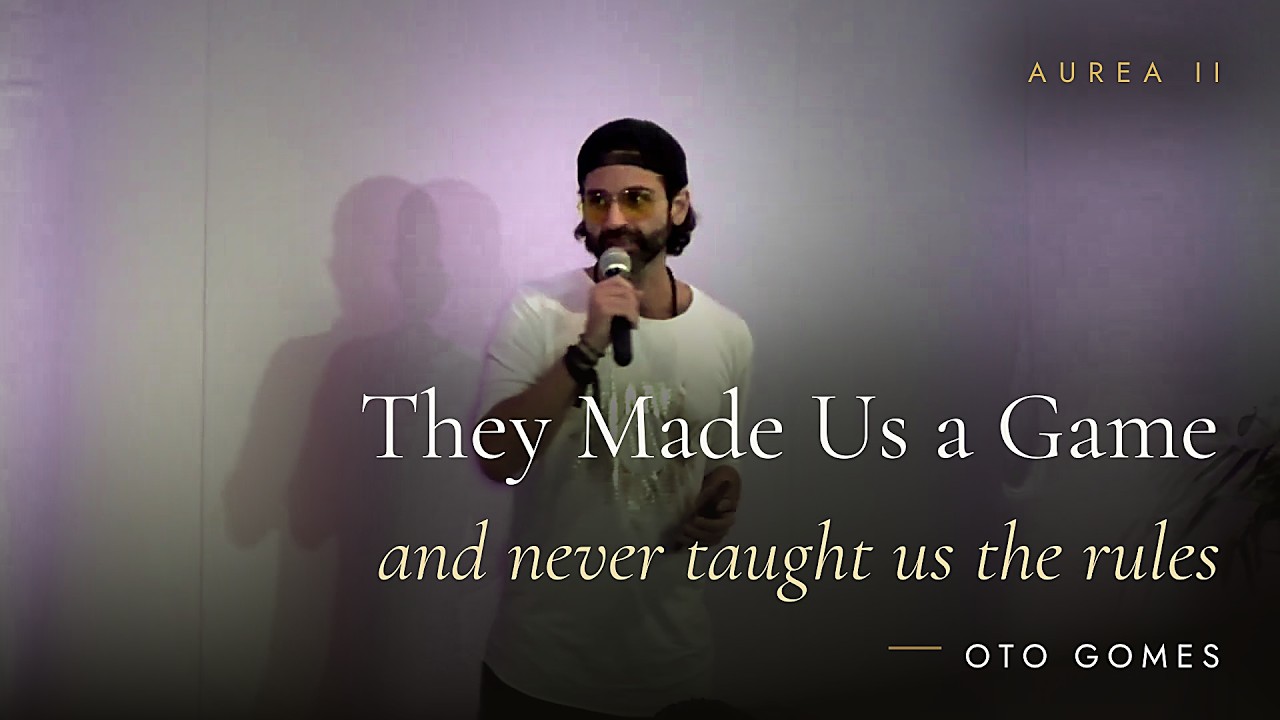
Oto Gomes spent ten years as an accountant and tax preparer, filing thousands of returns.
"I was actually supporting the system, and helping the system stay alive."
He had already had his first crack of doubt at twenty-two or twenty-three. The documentaries, the questions about banking. And did what most people do with that.
"I was like, what am I going to do? I'm just one person. So I went back to my nine-to-five and kept going."
How his body forced him to change course
Then his health broke in a way that is hard to misread.
"My whole body went into hives, head to toe. My eyeballs had hives. My teeth felt like they were itching. To me that was the signal: what you're doing is not what you're supposed to be doing."
So he left. Moved to California, chasing acting and the thing he had become obsessed with after reading the Bitcoin white paper in 2012. With a maths background, he says it clicked immediately.
And then it all came apart at once.
The hives kept returning. His marriage had grown disconnected; they separated, then divorced. And his house caught fire, with his car in the garage underneath it.
"I literally lost everything. That was the dark night of my soul. I felt like I hit rock bottom."
He is honest about how he handled it: smoking every day, morning to night, because he did not want to feel what he was feeling. All of it inside about ten months.
What survived the fire that took everything else
The one thing the fire could not take was the position he held on a blockchain. He says it was around seventeen thousand dollars going into 2017.
Then the bull run came. By his own account, that seventeen thousand became roughly twenty-one million in about a year and a half.
What is interesting is that he does not tell this as a victory. He tells it as a second crisis.
"Imagine being on one side of the spectrum in your relationship to money, and then getting thrown to the other side. I didn't know what to do with it. I didn't have a good relationship with money, so I learned the hard way."
Risk management and diversification, he says, he had to learn afterwards. The money arrived before the relationship to it did, which is its own kind of danger.
Why this talk isn't really about crypto
His framing is broader than the asset class, and it's where the talk earns its place here.
He asks you to run down the five layers of yourself (mental, emotional, spiritual, relational, physical) and ask a single question of each:
"What am I dependent on? What do I need in order to feel something, to feel connected, to feel worthy?"
Because that, he argues, is what any system optimises for. Not evil. Dependency.
And he is careful to point the finger away from the technology:
"Blockchain is not what's evil. Bitcoin is not what's evil. It's the one using it. It's the intention behind it."
Where your worth is kept
The sharpest idea in the talk has nothing to do with markets.
"Society has normalised the externalisation of self-worth. We give more value to the things we have than to ourselves. And that's a black hole. You're feeding something that will never give the energy back."
Flip it, and the whole relationship changes:
"If your worth is internalised, if you know what you are worth, then those things around you just become tools. Things you can use to create, to manifest, to reach your goals."
That is the actual test of anyone's relationship with money, and it does not depend on the amount. He had both extremes, and only the second one was survivable.
Are you the player in the game, or of it?
His central image is a video game, and it's the thing to carry out of this.
There is the character on the screen. He runs, he jumps, he obeys the rules. Walk far enough in one direction and he hits an invisible wall, because someone wrote it there.
Then there is the person holding the controller. Same game. Entirely different set of rules. They can change level, change world, or put the thing down and walk outside.
"So who do you want to be? The player in the game, or the player of the game?"
He does not pretend anyone lives permanently on the outside of it. His own practice is more modest and more usable:
"My goal has always been to shorten the amount of time between being the player and being the observer. The shorter I can get it, the better."
Where he says to actually start
Notably, his first step is not financial. Protect your spirit. And he refuses to fill in the answers, because they aren't his to fill.
The questions he leaves instead:
What does it mean to feel worthy, to you? Is your self-worth internalised or externalised? How dependent are you on centralised systems (emotionally, spiritually, mentally, physically)?
And underneath all of it, the belief that organises his life:
"God, the universe, the collective. It's in the relationship. It's not in the thing. Two people can do the same action with different intention and get an entirely different result. How you relate is where God is."
What this all means for your relationship with money
Nothing here is financial advice, and the figures are Oto's own account of his experience. What transfers is not the trade.
It's the audit. Go through the five layers and find where you have parked your sense of worth outside yourself. In an account, a title, a follower count, a person. Whatever is holding it is holding you, and it will keep quietly writing the invisible walls.
Get your worth back inside, and everything else becomes a tool.
Watch the full talk above.
Frequently asked questions
What happened to Oto Gomes right before his crypto position exploded in value?
His house caught fire with his car in the garage underneath it, his marriage ended, and recurring hives had already forced him to leave his accounting career. He calls it the dark night of his soul and says the crypto gains that followed created a second crisis, not a victory, because he didn't have a healthy relationship with money yet.
What does he mean by "the player in the game, or of it"?
A video game character obeys the rules and hits invisible walls someone else wrote. The person holding the controller can change level, change world, or put the game down entirely. His practice isn't living permanently outside the game. It's shortening the time between being the player and being the observer.
What does he say is the real danger of externalizing your self-worth?
Society has normalized giving more value to what you have than to yourself. That's a black hole that never gives energy back. If your worth is internalized instead, everything around you becomes a tool you use to create, rather than something you depend on to feel worthy.
Back to Wisdom