
Zack Blakeney at AUREA: Forgive the Cause, Not the Effect
Zack Blakeney on the AUREA stage: grief portals, the scroll as a mirror of the unconscious, and why forgiveness aimed at symptoms never holds, you have to go beneath the behavior to the wound.
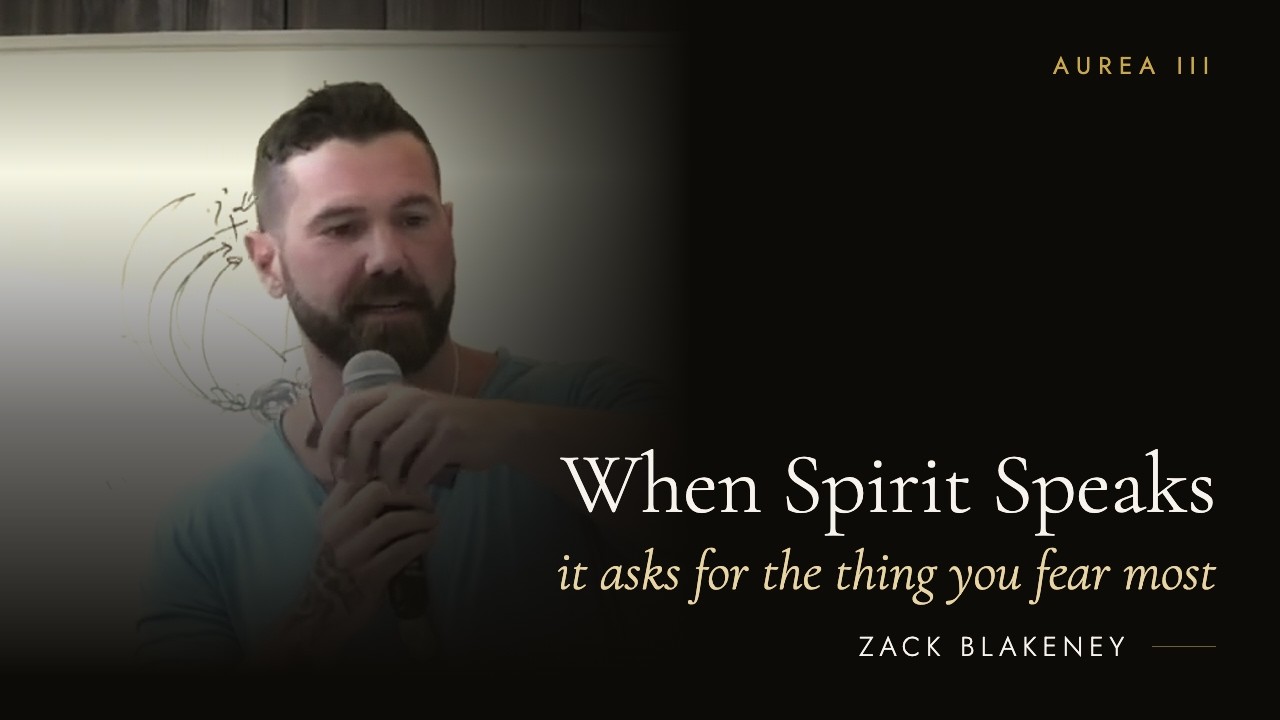
Zack Blakeney opened his AUREA session with a question few rooms are brave enough to answer: "How many guys in the last year went through a grief portal?" Hands rose. And instead of talking about it, he had the room honor it, together, physically, with a practice you can do in three seconds.
What followed was one of the most practical sessions of AUREA III: a working map of consciousness, the mechanics of avoidance, and a teaching on forgiveness that explains why so much of it never works.

Why he starts every session with the body
The session began in the body with a thymus thump, a rhythmic tap over the heart: "an instant nervous-system regulator." Before any concept, regulation. It set the tone for everything after: this is not philosophy, it is embodiment. The state you are in decides what teaching can even land.
The screen is a mirror
Then the question that made the room shift in their seats: "Why are you choosing to connect with a screen over yourself?" The scroll is not a harmless habit. It is a mirror of the unconscious. "What patterns are you both avoiding and simultaneously reinforcing?" When we reach for the phone to escape discomfort, we do not escape the level of consciousness we are in. We cement it.
He grounded it in the scale of consciousness (the map on which shame vibrates at the very bottom) and made the point plainly: you cannot scroll your way up that scale. You can only feel your way up, through the exact discomfort the phone was helping you avoid.

Why forgiving the effect never actually works
The heart of the talk was a confession most speakers would never make from a stage. He described trying to forgive himself for a compulsive pattern "hundreds of times" and why it never held: "I felt better temporarily, but I kept having to do it over and over. It's because I was trying to forgive the effect. It doesn't work."
The shift came when he went beneath the behavior to the cause (the wound driving it) and worked there instead, closing with surrender: "I willfully accept all things needed for my intention to become manifest." Forgiveness aimed at symptoms is maintenance. Forgiveness aimed at the root is release. Most people spend years forgiving the wrong layer.
What to do differently starting today
Regulate the body before you work the mind. Read your scrolling as a report on what you are avoiding. And when you forgive, go beneath the behavior to the wound that produces it. That is the only place forgiveness actually closes the loop.
Watch the full session above.
Frequently asked questions
Why does Zack Blakeney start sessions with a physical practice?
Because regulation has to come before any concept can land. The state you're in decides what teaching can actually reach you. He opens with a thymus thump, a rhythmic tap over the heart, which he calls an instant nervous-system regulator.
What does he mean by "the screen is a mirror"?
That reaching for your phone to escape discomfort doesn't escape the level of consciousness you're in. It cements it. Your scrolling reflects exactly what you're avoiding and simultaneously reinforcing. You can't scroll your way up the scale of consciousness; you can only feel your way up.
Why does forgiving yourself sometimes never actually stick?
Because you're forgiving the effect instead of the cause. He describes trying to forgive a compulsive pattern hundreds of times and feeling better only temporarily, until he went beneath the behavior to the actual wound driving it. Forgiveness aimed at symptoms is maintenance; forgiveness aimed at the root is release.
Back to Wisdom