
Is a Mastermind Group Worth It? How to Tell Before You Join
A good mastermind is small, made of real peers, and honest. Here is how to tell a good group from a sales funnel before you pay.
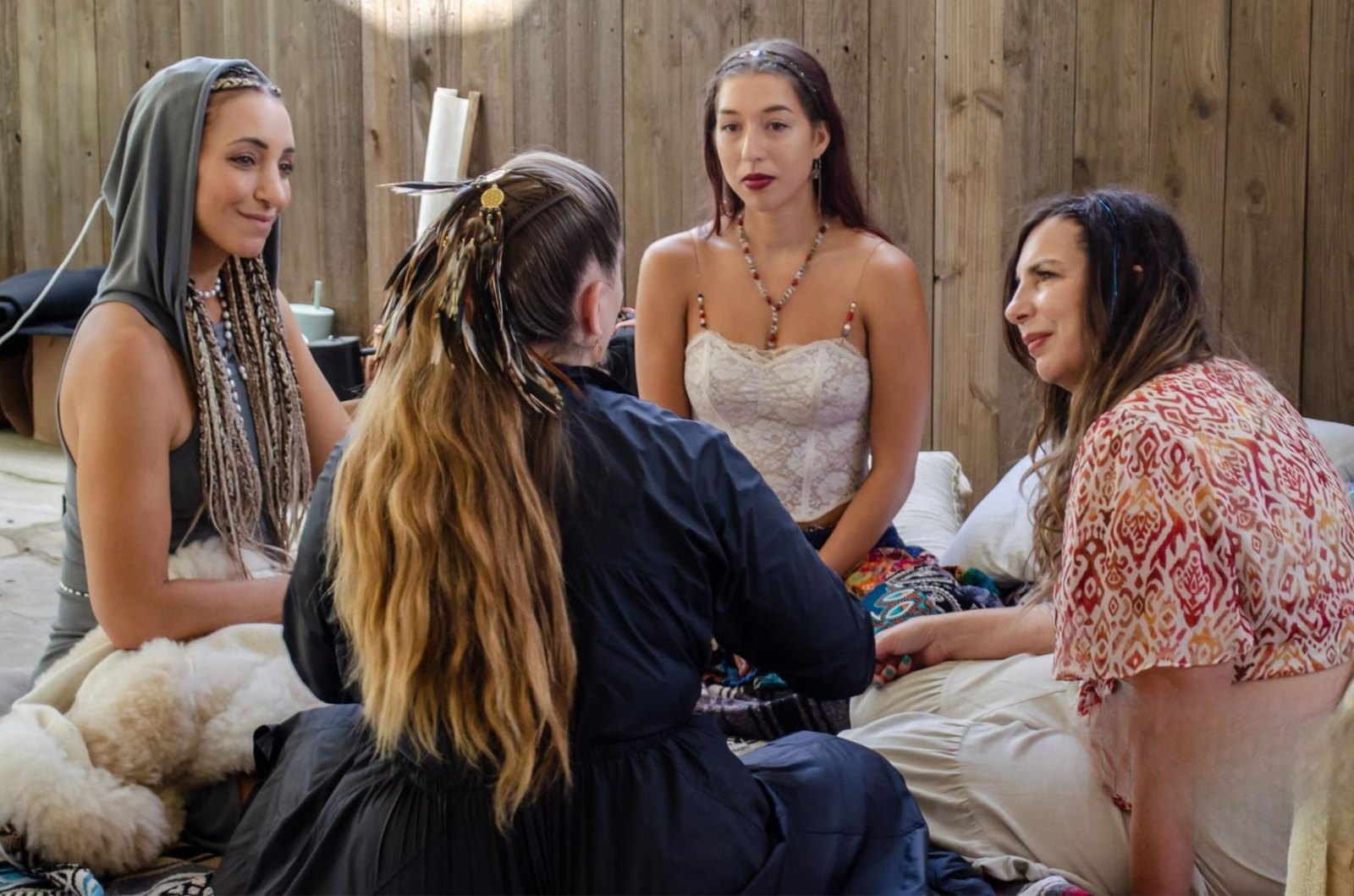
A mastermind group is worth it when it has a small number of people at about your level, a regular meeting time, and members who will tell you the truth. It is not worth it when it is mostly a sales funnel, when the group is too big to know each other, or when you are paying for access to one famous host instead of to the other members.
Here is how to tell the difference before you join, and what a good group actually feels like from the inside.
What is a mastermind group?
A mastermind group is a small group of peers who meet on a regular schedule to help each other with goals and problems. The idea comes from Napoleon Hill's 1937 book Think and Grow Rich, where he described a "master mind" as two or more people working together in harmony toward a shared aim.
Today most groups have four to ten people. They meet weekly, every two weeks, or monthly, on video or in person. A typical meeting gives each member time to share a win, name a problem, and get honest input from the rest of the group. Some groups also meet in person once or twice a year for a longer retreat.
A mastermind group is different from a course or a coaching program. In a course, one expert teaches. In a mastermind, the members teach each other.
What makes a mastermind group worth the money?
A mastermind group is worth the money when the people in the room change how you think and what you do. Everything else is extra.
"The clearer you are with your criteria, the better chance you're going to find what you're seeking."
— Dr. Stephen Brooks, Permaculture pioneer & founder, Envision · AUREA I · Miami Beach 2022
Look for these signs of a good group:
- The members are peers. Their businesses or roles are roughly the size of yours, or a little ahead. If you are far ahead of everyone, you will end up teaching. If you are far behind, the advice will not fit your life yet.
- It is small. Five or six people can know each other well. Thirty people cannot. If the group is large, ask whether it breaks into smaller pods.
- It meets often enough to matter. A group that meets once a quarter turns into a reunion. Every one to two weeks keeps everyone close to each other's real problems.
- People keep their word. Members show up, do what they said they would do, and admit when they did not.
- Honesty is normal. In a good group someone will say, kindly, "I think you are avoiding the real problem." In a weak group everyone just cheers.
What are the red flags in a paid mastermind?
The biggest red flag in a paid mastermind is when the main product is the host, not the group. If the sales page is mostly about one famous person, and you only get a few minutes with that person, you are buying a ticket to watch, not a seat at the table.
Other warning signs:
- Every meeting ends with a pitch for the next, more expensive level.
- Nobody will tell you who else is in the group before you pay.
- Past members describe it as "great content" but cannot name one friend they made there.
- The group admits anyone who can pay, with no call or application.
Prices for mastermind groups range from free to tens of thousands of dollars a year. Price alone does not tell you much. A free group of five honest peers can beat a costly group of fifty strangers.

Should you start your own mastermind group?
You should start your own mastermind group if you already know three or four people you trust and respect, and none of the paid groups you have found feel right. Many of the best groups are started this way, by one person sending a simple message: "Want to meet every other Tuesday and help each other?"
A few things make a homemade group last:
Set a fixed time. Same day, same hour, every time. Groups that pick a new time each month fall apart.
Give each person a turn. A simple format works: a quick win from everyone, then one or two people take a longer "hot seat" to work on a real problem.
Agree on privacy. What is said in the group stays in the group. Say it out loud at the first meeting.
Check in after three months. Ask each person if the group is still worth their time. Change the format, or let it end well, before it fades away.
Why does a small group change people more than a big network?
A small group changes people more than a big network because people only grow in front of others who know them well. Hundreds of contacts can give you leads. Only a few close peers can see the pattern you keep repeating and name it.
That is also why so many successful leaders feel alone. They have plenty of people around them, and very few who see them. We wrote more about this in You Were Never Meant to Build Alone.
What is a Penta, and why does group size matter?
A Penta is a working group of three to five people. The idea comes from a business model built on Human Design, the system that maps each person's natural strengths from their birth date, time and place. In that model, a group is read as one body. It has its own strengths, and its own blind spots, that no single member has alone.
Size is the first rule, because size changes what a group can do. Two people are a partnership: strong, but every job falls on one of you. Three people is the smallest group that starts to carry work on its own. Five is the most a group can hold while every person still knows exactly where they fit. Add a sixth, and it stops being one Penta. It turns into two groups that happen to share a room.
Inside a Penta, the model looks at twelve business skills, paired into six. A few examples: Vision and Capacity (seeing where to go, and having the energy to get there). Planning and Administration. Implementation and Public Relations (doing the work, and telling the world about it). Accounting and Oversight. Each person in the group carries some of these skills by design. A skill that nobody in the group carries is called a gap.
Gaps are where good groups quietly stall. A circle with no Public Relations can do beautiful work the world never hears of. A circle with no Capacity has big plans and runs out of fuel. You can't fix a gap by trying harder. Someone who holds that skill joins the group, or the group plans around the hole on purpose.
How is a Penta different from a typical mastermind?
A typical mastermind is built to talk. Each person brings their own business, the group gives advice, and everyone goes home to work alone. That can be very good. It is still a room of separate builders.
A Penta is built to work. The members build one thing together, and each person holds the part they are made for. One sees the direction. One keeps the plan. One gets the word out. One watches the numbers. Advice still happens, but the real test is whether the group ships work and earns from it together, week after week.
That also changes how you choose people. Most masterminds group people by revenue or industry. A Penta asks a different question: which skills does this circle already have, and which one is it Looking For? The best next member is the person Bringing the skill the group is missing, even if their business looks nothing like yours.
What happens when a group grows past five?
When a circle grows, the answer is a second shape, called the Wa. It begins once nine or more people work together. A full Wa is three Pentas plus one leader, the Alpha: up to sixteen people.
Each of the three Pentas works like a department, with its own focus. The Alpha leads from outside the Pentas and links the three. The model also gives the Wa a way to choose where to aim. When two or three Pentas share the same gap, that gap becomes the whole Wa's focus.
This is why the biggest masterminds tend to break apart or go quiet. Thirty people in one room can't all work as one body. Three small working groups with a clear leader can.
How does Serafina help a group organize?
Serafina is AUREA's guide for founders and leaders. Here is what she does for groups today:
- Reads your circle. Add three to five people with their birth date, time and place. Serafina reads every chart and shows which of the twelve business skills your group holds, and which are gaps, with the most urgent named first.
- Describes who you are Looking For. For a gap, she writes a plain description of the person your circle is missing, with no Human Design words, so you can send it to anyone. You can also add up to twelve people you know and see which ones fill the gap.
- Sorts a bigger group into Pentas. Upload a spreadsheet of up to 25 people. Serafina reads every chart and sorts them into Pentas, saves the group on its own page, and gives you a link to share. The birth data stays with the person who uploaded it.
- Writes each Penta's first 90 days. Each Penta gets a roadmap in four stretches: form the group, take on a first project, show the work, and make a first offer. Every step names the member who owns it, and the plan runs on one weekly meeting.
The Wa view, three Pentas and an Alpha read as one group, is being built now. Until it ships, Serafina reads each Penta in a large group on its own.
A mastermind built this way doesn't depend on luck or on who happened to buy a seat. You see the shape of the group before the first meeting, and you know what to do about the hole in it.
Where can you meet people for a mastermind group?
The best place to meet people for a mastermind group is somewhere you get to see them for more than a handshake. A multi-day gathering works well, because by the third day you know who is honest, who keeps their word, and who you would call on a hard day.
"Put yourself in situations where you can understand the values that somebody has."
— Jeff Scult, CEO, One Golden Thread · AUREA II · Miami 2023
AUREA IV: The Next Renaissance is March 26 to 28, 2027, in Elgin, Texas, about 35 minutes east of Austin. It is three days for founders and leaders who want their work to mean more. Many people arrive alone and leave with a few people they plan to keep meeting. See the weekend at aurealeaders.com/2027.
Common questions
How many people should be in a mastermind group?
Most good groups have four to eight people. That is enough for a range of views, and small enough that everyone gets real time each meeting.
How often should a mastermind group meet?
Every one to two weeks works for most groups. Monthly can work if each meeting is longer. Less often than that, and members lose track of each other's lives.
Is a mastermind the same as a coaching program?
No. In a coaching program, one coach guides you. In a mastermind, the members guide each other. Some paid groups include a facilitator, but the main value should still come from the peers.
How do I know if a mastermind is a scam?
Be careful if the host will not tell you who else is in the group, if every meeting ends with an upsell, or if there are big income promises. Ask to speak with two past members before you pay.
What is the difference between a Penta and a Wa?
A Penta is one working group of three to five people. A Wa is the larger shape that starts at nine people: three Pentas plus one leader, the Alpha, up to sixteen people in all. Each Penta works like a department, and the Alpha links them.
Can Serafina tell me who belongs in my mastermind?
Serafina can read a circle of three to five people and show which business skills it has and which it is missing. She can describe the person your group is Looking For, compare up to twelve people you know, and sort a group of up to 25 into Pentas. Try it at serafina.aurealeaders.com.
Back to Wisdom