
Veterans Moved Texas on Psychedelics. Here Is What They Can Teach the Rest of Us.
Combat veterans, not the wellness industry, got Texas to fund ibogaine research. What the Stanford study found, where the $50 million program stands, and why the veterans' way is the responsible model.

Texas did not start funding psychedelic research because of hippies, academics, or the wellness industry. It started because combat veterans stood up in the Capitol and told the truth about what had helped them. On Veterans Day, the rest of us owe them more than thanks. We owe them attention, because the way they pushed for this medicine is the most responsible model anyone has offered.
This piece covers what the research on ibogaine and veterans actually shows, where the $50 million Texas program stands as of late October 2026, the real risks, and what the veterans' approach teaches every professional who is curious about psychedelics. Nothing here is medical or legal advice, and nothing here is an offer of medicine.
Why are veterans leading the push for psychedelic research in Texas?
Veterans are leading the push because the standard treatments failed many of them, and they are dying at a rate the country has not been able to bring down. The 2025 VA National Veteran Suicide Prevention Annual Report counted 6,398 veteran suicides in 2023, an average of about 17.5 a day.
Behind that number are men and women carrying blast injuries, chronic pain, PTSD, and, for many, an opioid habit that began in a hospital. Navy SEAL veteran Marcus Luttrell put it plainly when he testified for the Texas ibogaine bill: "When I got hurt, I got introduced to opioids."
Former Texas Governor Rick Perry, who chairs the nonprofit Americans for Ibogaine, became the bill's most visible champion after watching veterans he knew recover. "This is the most important work I've ever done," he said after Governor Greg Abbott signed SB 2308 on June 11, 2025. That a former Republican governor and a Navy SEAL led the charge is exactly why it passed.
What did the Stanford ibogaine study of veterans find?
The Stanford study found large drops in PTSD, depression, and anxiety among 30 special operations veterans with traumatic brain injuries, one month after a single ibogaine treatment given with magnesium. Published in Nature Medicine in January 2024 and led by psychiatrist Dr. Nolan Williams, it reported average reductions of 88 percent in PTSD symptoms, 87 percent in depression, and 81 percent in anxiety.
Disability scores on the World Health Organization's assessment fell from an average of 30.2, mild to moderate disability, to 5.1, no disability. Testing showed better concentration, memory, and impulse control. Nineteen of the 30 veterans had been suicidal at some point, and seven had attempted suicide.
"No other drug has ever been able to alleviate the functional and neuropsychiatric symptoms of traumatic brain injury," Williams said.
An honest advocate has to say the rest just as clearly. The study had no control group and no placebo. The veterans chose the treatment themselves and arranged it at a clinic in Mexico, where ibogaine is not banned, so the people who enrolled were already motivated. The main results ran to one month. These are dramatic early findings, and they are a reason for serious trials. They are not yet proof.
What are the risks of ibogaine?
The main risk of ibogaine is to the heart. The drug can disturb the heart's rhythm, and deaths have been reported in unsupervised settings, which is why the Stanford protocol paired it with magnesium and why every responsible program screens and monitors patients closely.
The Stanford team reported no serious side effects and no heart problems among its 30 participants, with headaches and nausea the most common complaints. Thirty carefully screened people in a medical setting is a small number. Risk shows up at scale, in the people who were not screened, and in places where nobody is watching the monitor.
Ibogaine also remains a Schedule I drug in the United States, illegal to possess or prescribe. Texas money for research does not change that for anyone outside an approved trial.
Where does the Texas ibogaine program stand now?
The Texas ibogaine program is funded on paper and stalled in practice. SB 2308 set aside $50 million for FDA-track trials, and the state picked UTHealth Houston and UTMB Health to lead a university consortium called IMPACT, focused on addiction, PTSD, and brain injury.
The law required a drug company to match the money, build a presence in Texas, and give the state 20 percent of future revenue. No company met those terms. On March 31, 2026, Lieutenant Governor Dan Patrick and Speaker Dustin Burrows said Texas would run the program through state researchers instead: "We intend to fully fund this program." Rice University's Katharine Neill Harris warned that the law as written may bar the state from releasing the money without a private match, and that full drug development will likely require "much more than $100 million overall."
Washington has added momentum. An April 18, 2026 executive order put at least $50 million toward state psychedelic research and linked ibogaine to Right to Try, while keeping these drugs in Schedule I. As of late October 2026 we could find no public announcement that the Texas trials have enrolled a patient. Veterans are waiting.
What veterans get right about responsible psychedelic use
Veterans get three things right that much of the civilian psychedelic world gets wrong: they went public, they demanded science, and they healed together. Each one is a lesson for founders, executives, and healers who are curious about these medicines.
They went public. Underground use protects the individual and leaves the system unchanged. Veterans testified under their own names, in a state that prosecutes these substances, and asked for trials, screening, and data. That kind of courage moved a legislature in one session.
They demanded science. The veterans' coalition did not ask Texas to legalize ibogaine. It asked Texas to study it properly, through the FDA. That is a slower road, and it is the road that ends with safe, legal access for people who cannot afford a flight and a private clinic.
They healed together. The Stanford participants were recruited with help from VETS, a nonprofit founded in 2019 by former Navy SEAL Marcus Capone and his wife, Amber. VETS describes its grants as access to vetted care "within a framework of support", and it was built by a husband and wife, side by side. A veteran who comes home to people who understand what he went through has somewhere to put what he learned.
Compare that with the typical underground weekend: strangers, no screening, no follow-up, and a flight home Monday to the same isolation. The veterans built the opposite of that, and we should copy them.
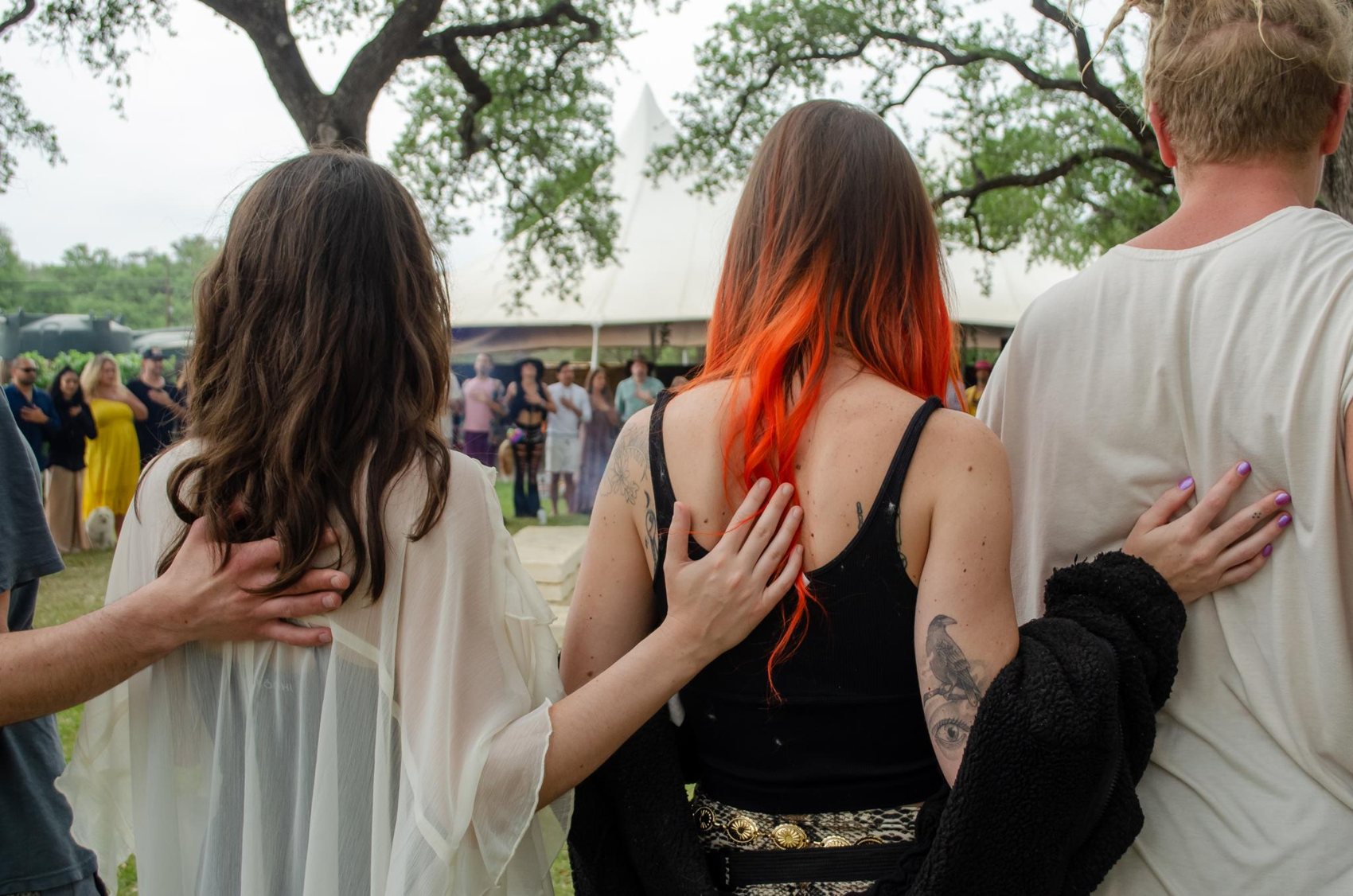
Where AUREA stands on veterans and psychedelic research
AUREA advocates for psychedelics used responsibly and intentionally, for personal growth, for better work, and for deeper connection with community and tribe. We support the Texas ibogaine research, we want it funded for real, and we think veterans have earned first access to whatever it proves.
We also hold a position that will not please everyone. A medicine experience without a community afterward is a powerful night that fades. We believe much of what makes any breakthrough last is who you come home to. Integration happens in relationships, over months, with people who will notice if you slip. That is the part most civilians skip, and it is the part we build.
At AUREA IV: The Next Renaissance, March 26 to 28, 2027, in Elgin, Texas, every guest is matched into a Penta, a small circle of up to five people, by Serafina, our companion. Your Penta is who you tell your next move to and who holds you to it after you go home. What we offer is breathwork, honest conversation, and people who stay.
Texas law is clear and we respect it: ibogaine, psilocybin, and MDMA are illegal outside approved research. We will keep supporting the trials and reforms that make careful, legal access possible.
If you are a veteran in crisis, call 988 and press 1 to reach the Veterans Crisis Line, or text 838255, any hour of any day.
Frequently asked questions
What is ibogaine?
Ibogaine is a psychedelic compound from the root bark of the iboga shrub, native to Central Africa, where it has a long history of traditional use. Researchers are studying it for opioid addiction, PTSD, and traumatic brain injury. It carries a known risk of dangerous heart rhythm problems, so it requires medical screening and monitoring. Ibogaine is a Schedule I drug in the United States and is illegal to possess or prescribe outside approved research.
Is ibogaine legal in Texas?
No. Ibogaine is a Schedule I drug under federal law and is illegal in Texas outside approved research. In 2025 Texas passed SB 2308, which set aside $50 million for FDA-track clinical trials, but that law funds research only. It does not legalize ibogaine. As of late October 2026, no public announcement showed the state trials, led by UTHealth Houston and UTMB, had enrolled patients.
What did the Stanford ibogaine study find in veterans?
The Stanford study, published in Nature Medicine in January 2024, followed 30 special operations veterans with traumatic brain injuries who received ibogaine with magnesium at a clinic in Mexico. One month later, PTSD symptoms fell an average of 88 percent, depression 87 percent, and anxiety 81 percent, with no serious side effects reported. The study had no control group and a one-month endpoint, so larger controlled trials are needed.
Why do veterans support psychedelic research?
Many veterans support psychedelic research because standard treatments have not helped them with PTSD, traumatic brain injury, and addiction, and veteran suicide remains high, about 17.5 a day in 2023 according to the VA. Veterans including Navy SEAL Marcus Luttrell testified for the Texas ibogaine bill, and former Governor Rick Perry championed it after seeing veterans he knew recover.
How does AUREA approach psychedelics?
Nothing on this site is an offer of medicine. AUREA advocates for responsible, intentional use and for legal, research-backed access, such as the Texas ibogaine trials. What AUREA builds is the support people need around any deep experience: breathwork, honest community, and small circles called Pentas that keep meeting after the event ends.
Back to Wisdom